Caution: these works are deceptively simple…
For over a decade, Eric Gyamfi has continually set out to touch and stain the photographic medium. Its processes. Its procedures. Its apparatuses. Its apparentnesses.
In STOMATA: DR. MAHASHE’S OPEN FRAMES, there is evidence of the photographer’s desire to play, but does the artist ever escape the seriousness with which they practice curiosity?[1] Regardless, Eric Gyamfi beckons, promising to seduce us with a “funky set” of experimental large-format photographs of the same title, the purpose-built and modified pinhole cameras that produced them, process notes and annotations, and a library activation.[2] This arena is filled with expansive dreamscapes of visual and technical qualities that leave one pondering, “ei how come…”
Well, since you asked…
Eric Gyamfi recounts two chance moments in early 2025 that anchor this project. A prompt from long-time friend and colleague, Dr Tebogo George Mahashe, for whom the project is titled. A pinhole camera-building workshop with a group of MFA students at the KNUST Department of Painting and Sculpture. Questions. What if the camera’s interior were not merely a means to an end? What if the activities and systems within it could be deliberately disturbed, such that any resulting dysfunction would bring forth new potential?
Across all the images in STOMATA: DR. MAHASHE’S OPEN FRAMES, the makers are their own subjects—let’s call them the “intendeds”. Tools and materials from the darkroom: safelight, developing trays, cameras, C-41, film cassettes, etc. The studio environment: backyard, front gate, lawn, and plantain trees. The human contributors: Eric Gyamfi, Gilbert “Ampa” Sackey, Jemuel Lawson, Nana Akua Agyeibea Asare Boye, Frank Tetteh, and Emmanuel Kpabitey Djabatey; or their busts, in the case of Gershon Gidisu. The images, however, should not be misconstrued as documentary photography.[3] If ‘Just like Us’ (2016) was still largely documentary, ‘A Certain Bed’ (2017) was surely Eric Gyamfi’s departure from that towards a more expanded field. Shall we think of them then as a sort of selfie? It is, after all, a case of photographic tools, systems, and personnel photographing themselves. Truly, the thought would not be far-fetched at all. ‘Mapping Rumours: A Cartographer’s Guide’ (2021-2024) did introduce us to a camera-less process whereby plant matter (the subjects) reacted with photographic chemical compounds to create vibrant images of themselves. ‘Fixing Shadows: Julius and I’ (2018, ongoing) continues this shift toward an analogue train of thought, with layered images re/produced not by optical means but by chemical manipulation—two faces melding into endless composites; strange and otherworldly.
STOMATA: DR. MAHASHE’S OPEN FRAMES is a return to the camera, albeit with a growing, equal attention to material and subject matter. It builds on previous works, yes, but with a somewhat incidental and certainly refreshing take on open-frame composition — an arrangement of pictorial elements that reminds us that things continue to exist beyond the picture’s borders.
An abundance of repeating lines, shapes and fragmented paths leading every which way and nowhere all at the same time point to mise-en-abyme (Mirrored Interior – 9). An already open composition, with many interesting parts and consequently no distinguishable subject or plane, becomes even more open when “volunteer” subjects travel from the extreme left or right side of the camera and cast themselves over the image (Mirrored Interior – 14 II A & B).[4] Depending on the intensity of light, the volunteer could be subtle, like grass beneath the camera (Mirrored Interior – 17 A & B) or quite prominent, like the open sky above, in a courtyard, overpowering the Intended (Mirrored Interior – 4 A & B). As their titles suggest, the cameras that produced them had mirrors strategically placed in the inner chambers, facilitating multiple pathways for direct light (Intendeds) as well as reflected light rays (volunteers). Other cameras duplicate the Intendeds in radial and vertical patterns or otherwise, depending on the respective pinhole formations (Multiple Pinhole – Image P 4, 5, 6, 7 & 10). Eric Gyamfi emphasises that although the images appear similar to double exposures, the layers result from “a single uninterrupted act of exposure”. These layered effects recur in some images also produced with mirrored interiors, although these were expected to record other phenomena that are less readily observable (Mirage Test – Image M7 I & II). In tests where plant gases and heat were introduced in the chamber, the augmented image appears more vibrant with richer contrast (Plants & Heat – Untitled 12 & 13).
In praxis, the open frame is apt for Eric Gyamfi as a working strategy. Of deep listening. To the things that insist on making themselves known. Of following bravely. Down the path of artistic foolery towards smoking mirrors.
STOMATA: DR. MAHASHE’S OPEN FRAMES produces a visual language that stems from simple but deliberate compositions of colour (RGB), shape, and a bit of trickery. No pre-determination. A lot of improvisation. If we are patient, details can begin to appear where one would have dis/missed them. Space bends. Time stretches. The illusions do not beg to be discovered; they just are. Relationships between the works form before our very eyes if we pay attention. We are treated to an estrangement of the photograph through these interferences—poetic license, really. Seduction. Enchantment. A sense of awe and the delight of living through the making of art, of joy, of fun!
words by Abbey IT-A
————————————————————————-
[1] I use the titles “artist” and “photographer” interchangeably here as a nod to Eric Gyamfi's optimistic positionality. That photographic practice in our context could expand beyond the documentary and explore [word like disciplines] the medium is frequently in conversation with. i.e., programming, astronomy, medicine, etc.
[2] The works in this show are selections from a larger project, produced as a commission in response to the 59th Carnegie International, concurrently showing at the Carnegie Museum of Art, Pittsburgh. It includes behind-the-scenes footage, journal entries, and additional work that is not included in the Carnegie show. It felt crucial to present the work here in the context of its production. This presentation at FCA-Ghana foregrounds the project’s rigorous technical aspects. It balances this with its poetic attributes and is fitting for the space which supports process-based contemporary art practices.
[3]Pun intended. In many ways, the practicalities of this project are literally documentation.
[4]Pinhole cameras are known to democratise any apparent planes in how notions like foreground, background and subject receive equal opportunities in exposure.
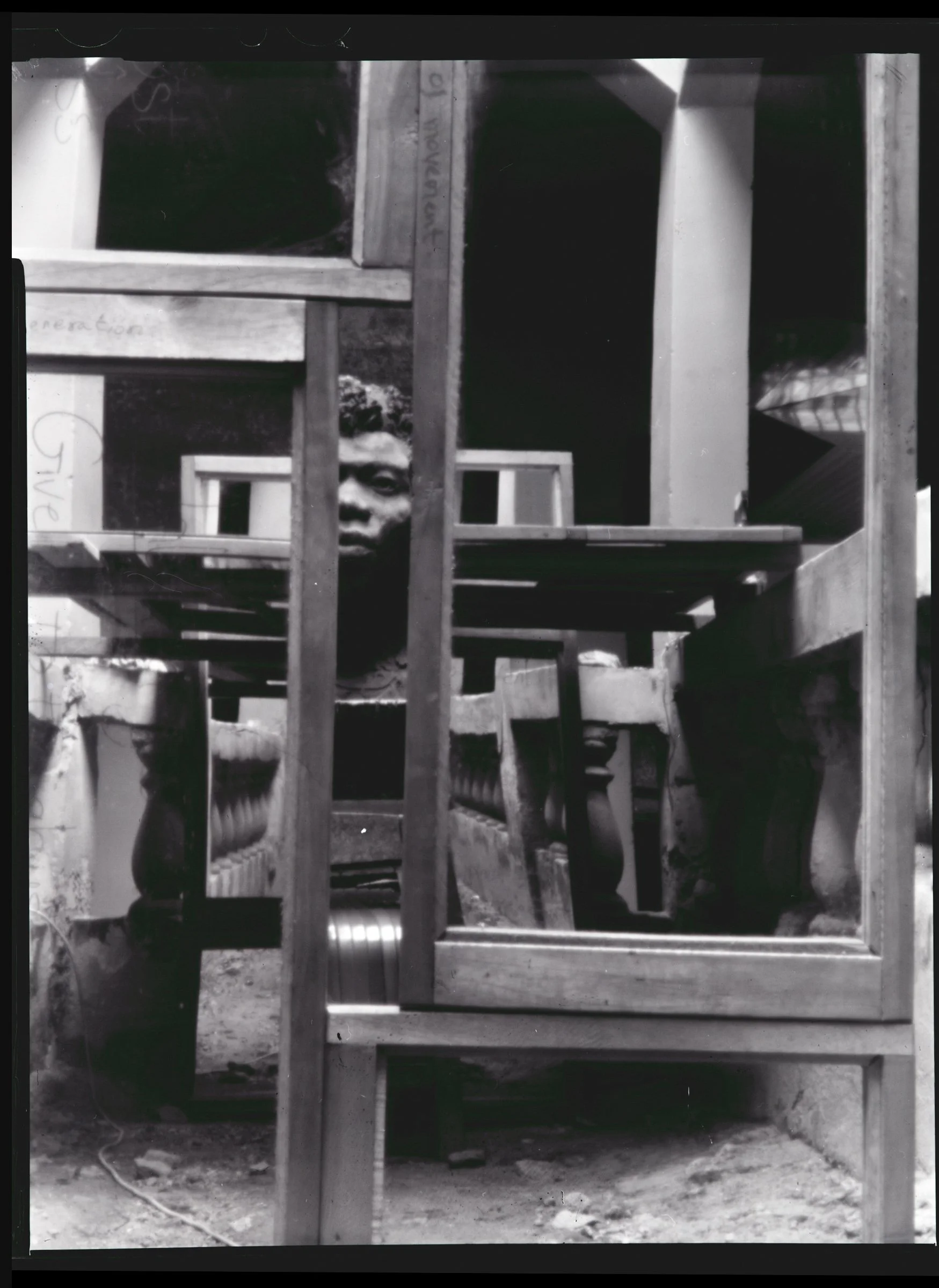
Mirrored Interior - Image 9
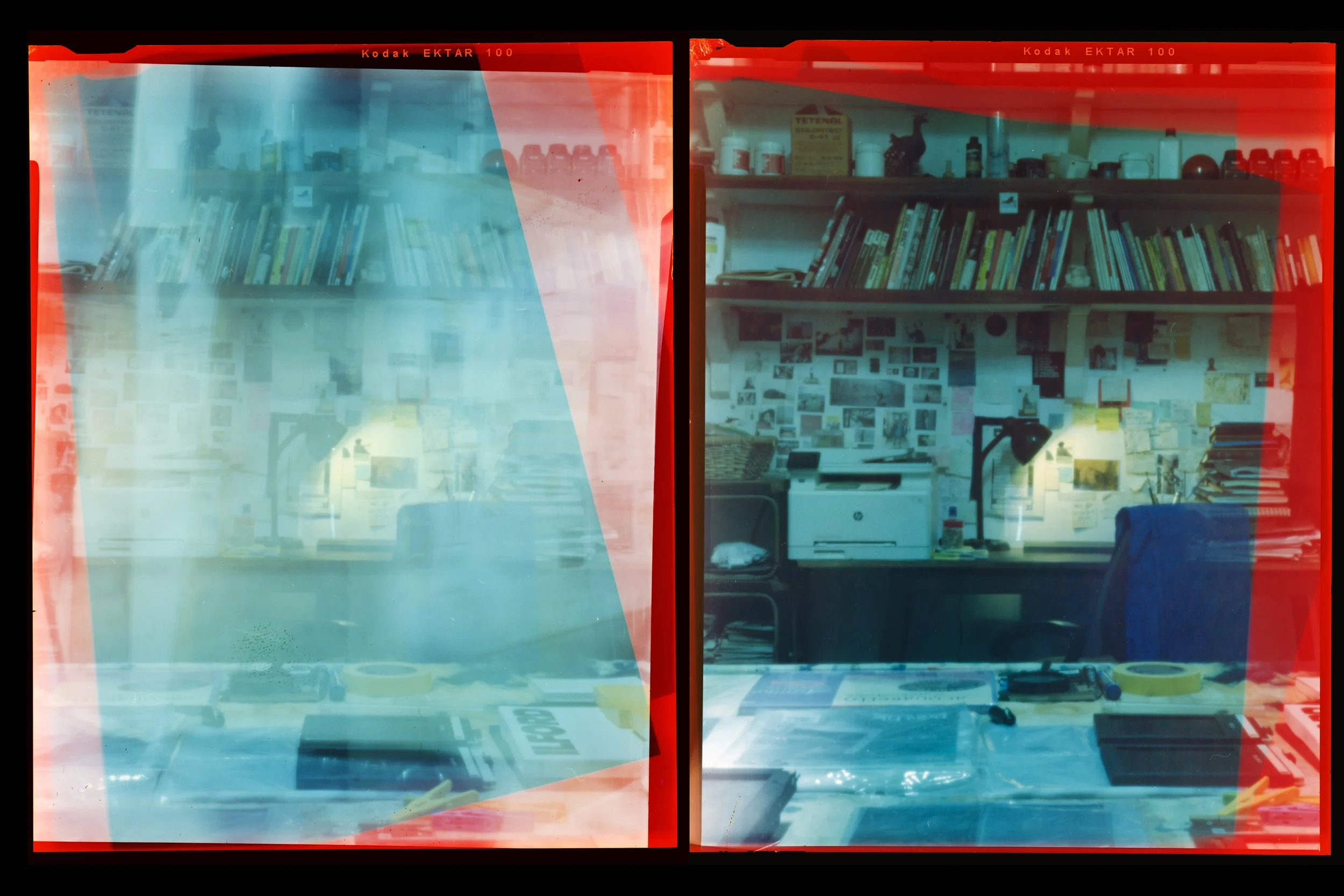
Mirrored Interior – 14 II A & B
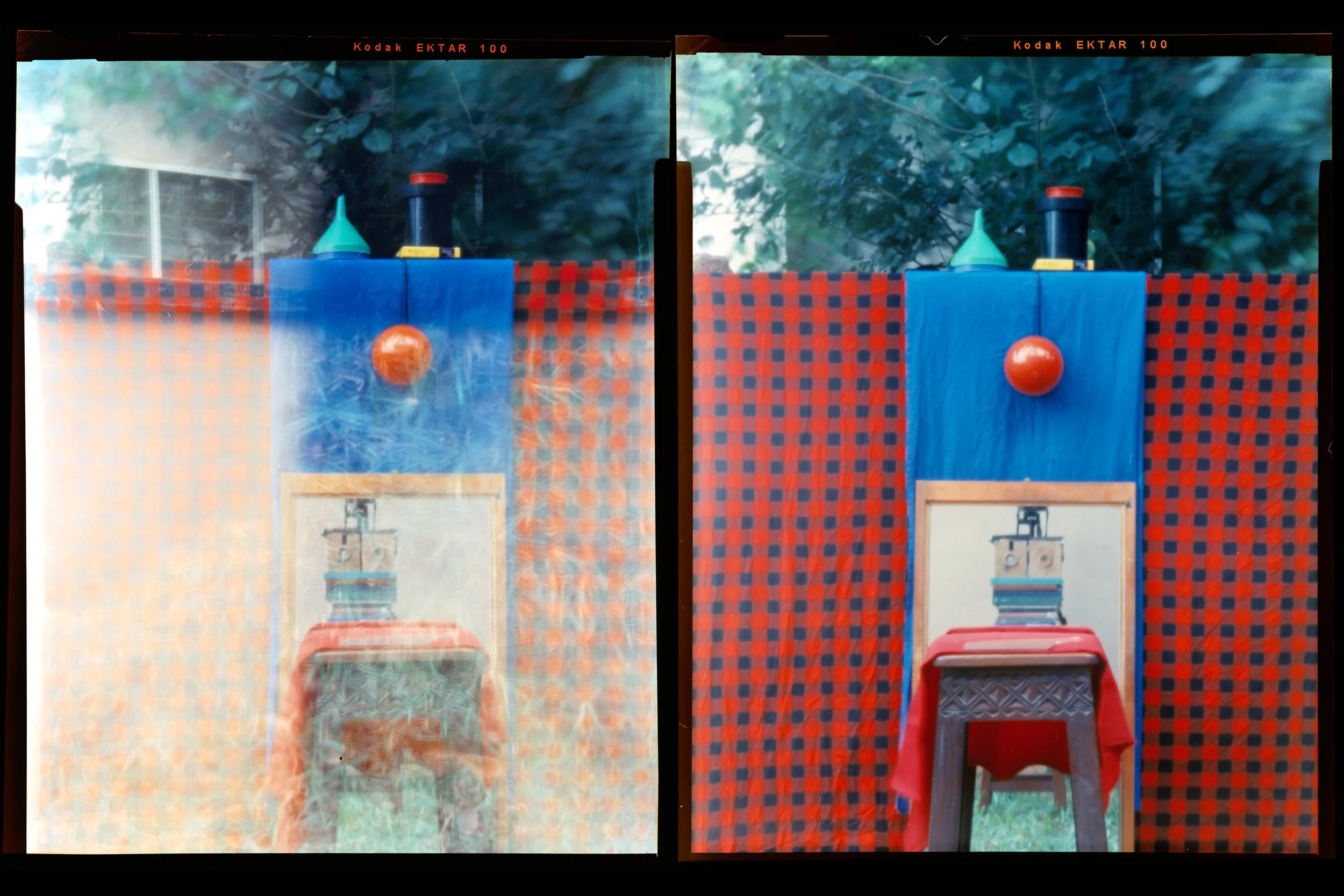
Mirrored Interior – 17 A & B
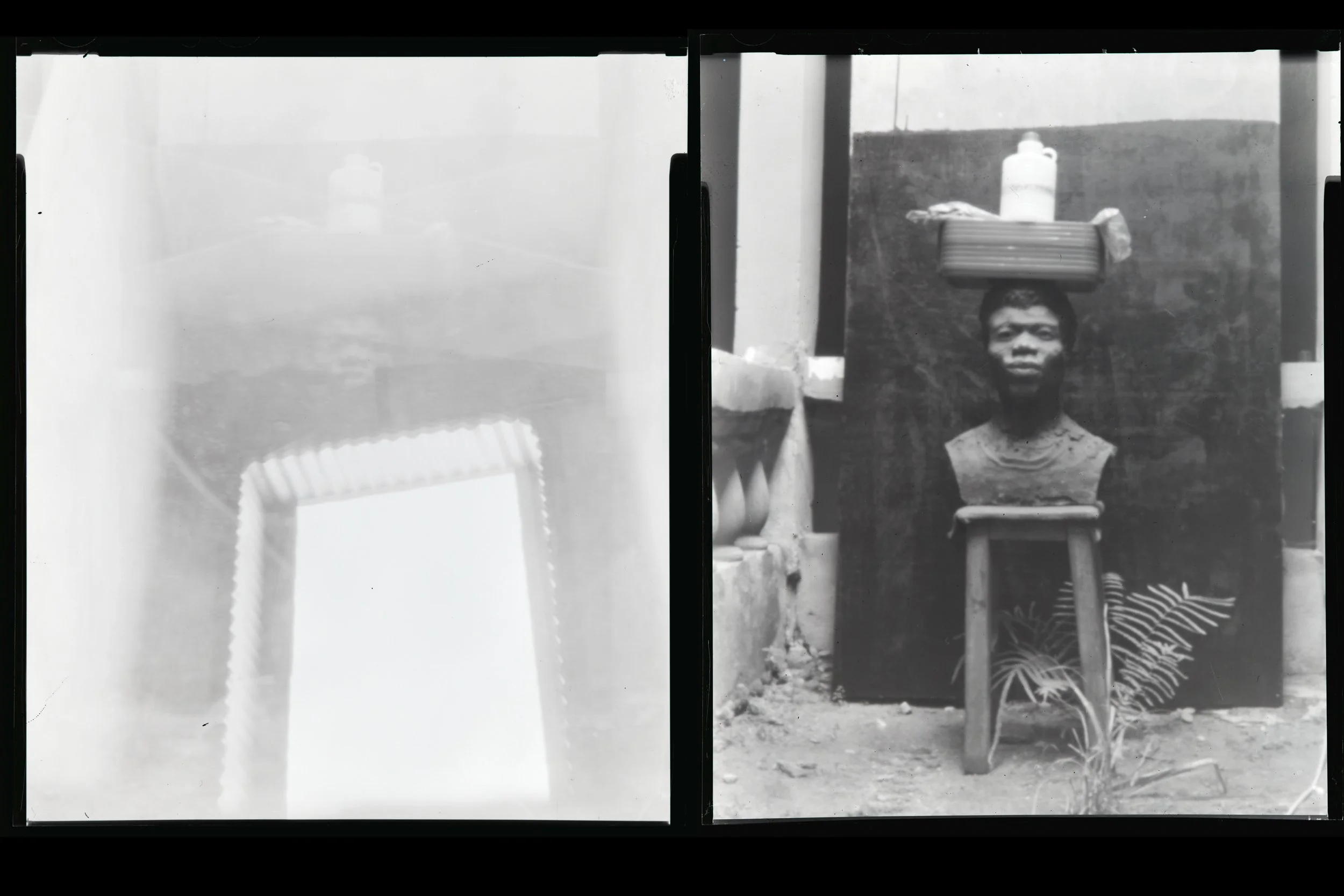
Mirrored Interior – 4 A & B
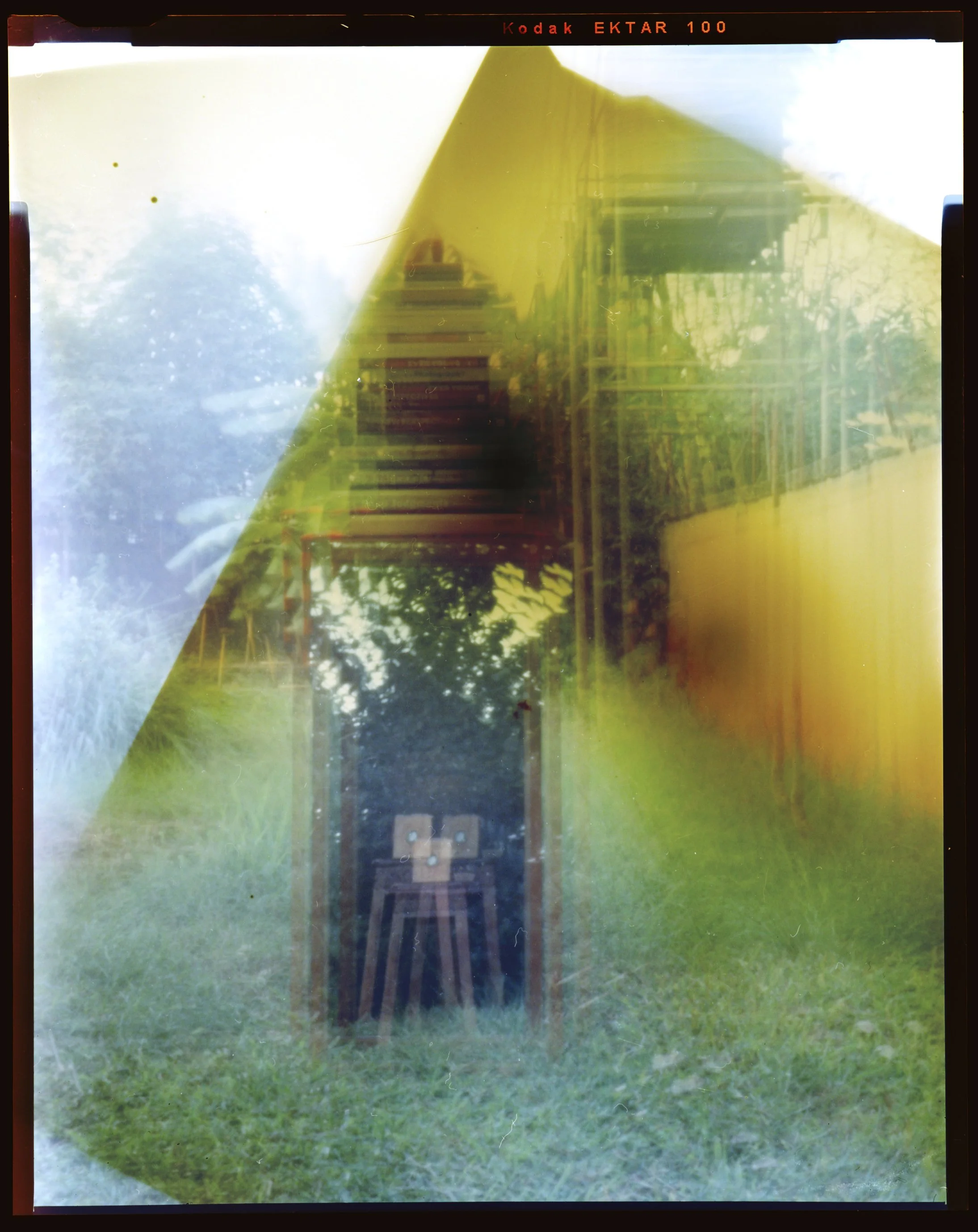
Multiple Pinhole – Image P 4
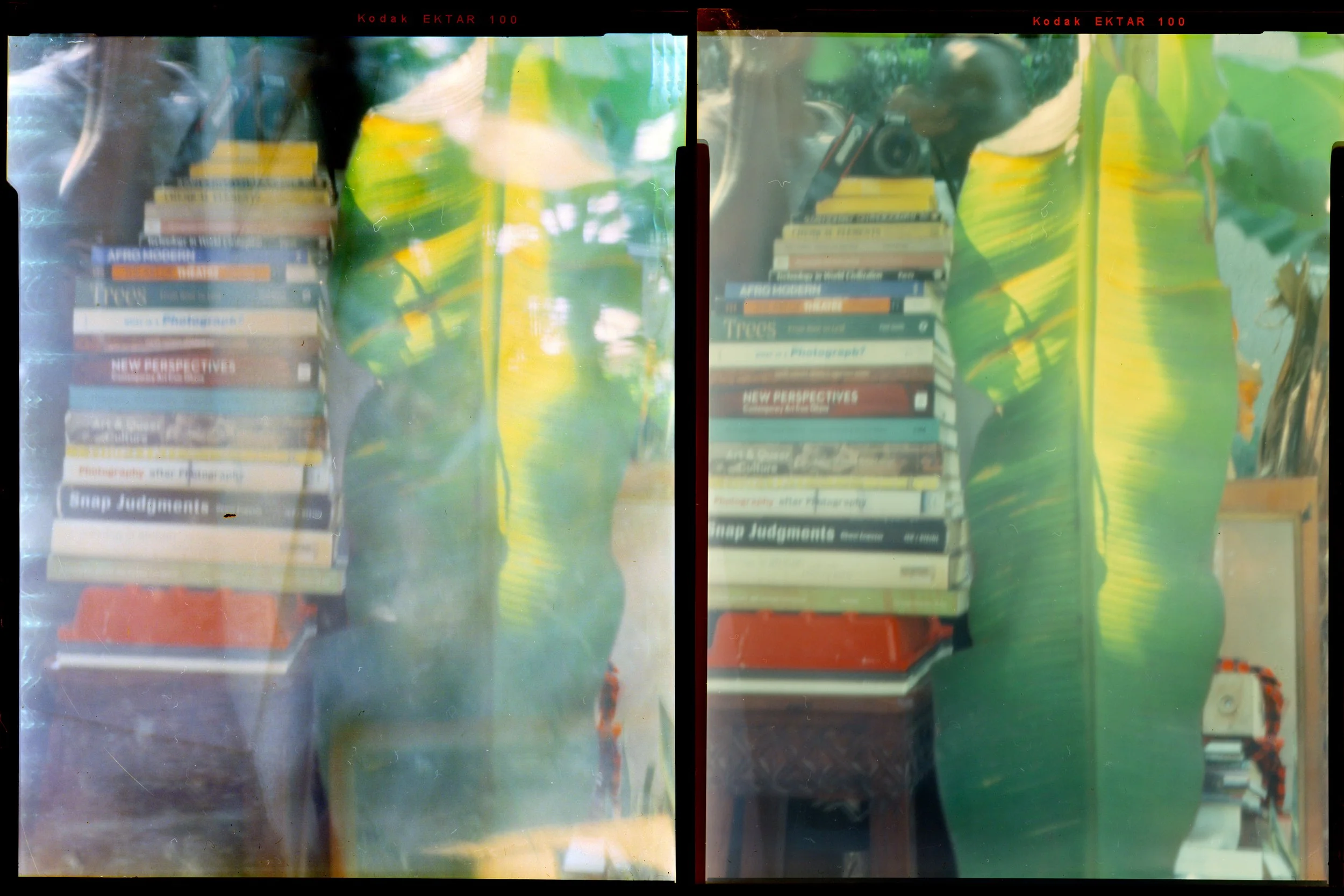
Mirage Test – Image M7 I & II
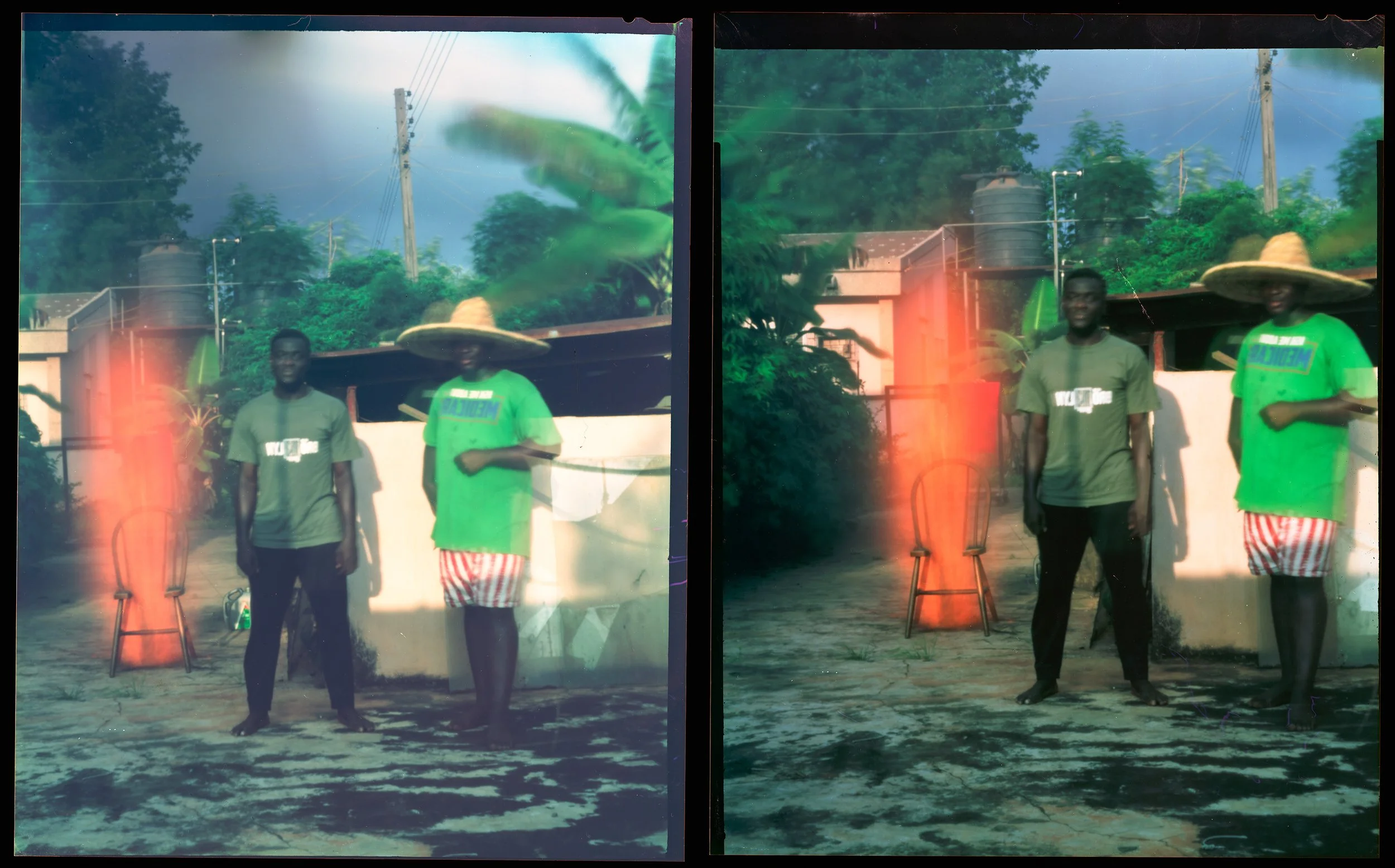
Plants & Heat – Untitled 12 & 13
solo exhibition by eric gyamfi
curated with abbey it-a
𖡡 fca-ghana
1st circular rd, cantonments—accra
open
tue—sat | 10am—5pm
23 may — 18 jul 2026
EXHIBITION SUPPORT TEAM
ahenkan yeboah, isaac gyamfi assumeng, setor mensah, sandra obeng-boateng,
livingston agbeshie, eric “shaggy” allotey, emmanuel amponsah jnr.,
prince brutus quarshie, gershon gidisu, abass ismail, dennis nii ankamah addo, godfred goodman, lisa soto, yaw atuobi, gilbert mensah, edwin mawuli egbe, adwoa amoah, ato annan
the full body of works, ‘Stomata: Dr. Mahashe’s Open Frames’ (2025), included in this exhibition, were produced as a commission in response to the ‘59th Carnegie International, carnegie museum of art, pittsburgh.